

One phone call.
Fifty years of
showing up.
In the spring of 1974, Dr. Evelyn Marsh — herself newly blinded at forty-two by a retinal detachment — answered a call from a neighbor whose son had just lost his sight in a construction accident. She had no office, no funding, and no staff. She had a kitchen table, a Braille slate, and the conviction that blindness was a skill problem, not a life sentence.
That afternoon she taught her neighbor’s son to read his own name. He taught it to two friends. By December, fourteen adults were meeting in her living room every Tuesday. Beacon was incorporated the following January — a nonprofit with a single purpose that hasn’t changed in fifty years: put the tools of independence directly into the hands that need them.

A building of our own.
Nine years after the kitchen table, Beacon opened its first dedicated office in a converted storefront on Clement Street — two rooms, a Braille library, and a waiting list that stretched to forty-two names. The city of San Francisco provided the first public funding: $18,000 to hire a certified Orientation & Mobility specialist.
Marcus walks to work.
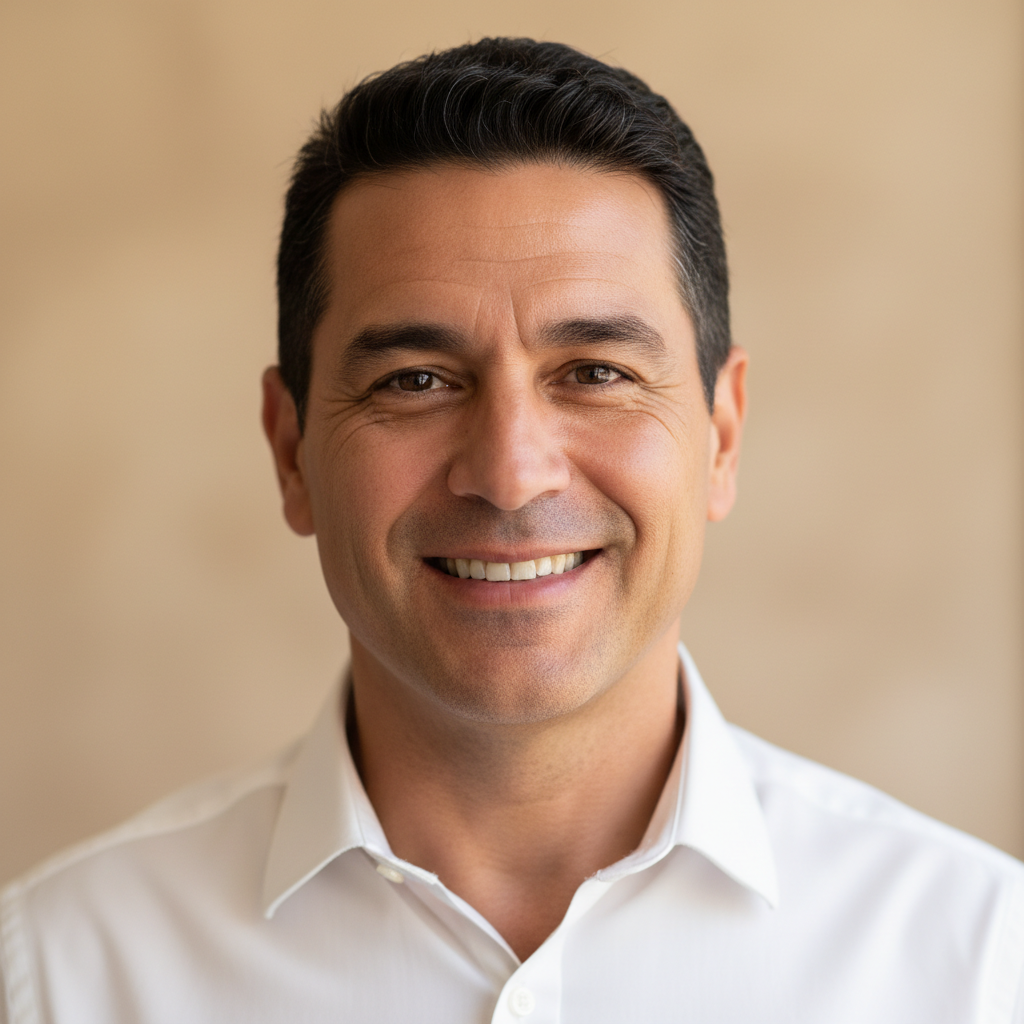
Marcus Delgado-Wright was Beacon’s first Orientation & Mobility graduate to return to full-time competitive employment. A machinist who lost his central vision to Stargardt disease at thirty-one, he spent four months learning long cane travel, tactile maps, and bus route navigation. On April 3, 1991, he walked the 1.2-mile route from his apartment to the shop floor — alone — for the first time.

The screen speaks.
When JAWS 4.0 shipped on a CD-ROM and cost $895, most of Beacon’s clients couldn’t afford it. Beacon opened its Assistive Technology Lab in 2003 with twelve workstations, each running a licensed screen reader — the first publicly accessible AT lab in Northern California. Within eighteen months, 340 adults had completed the eight-week digital literacy course.
The law catches up.
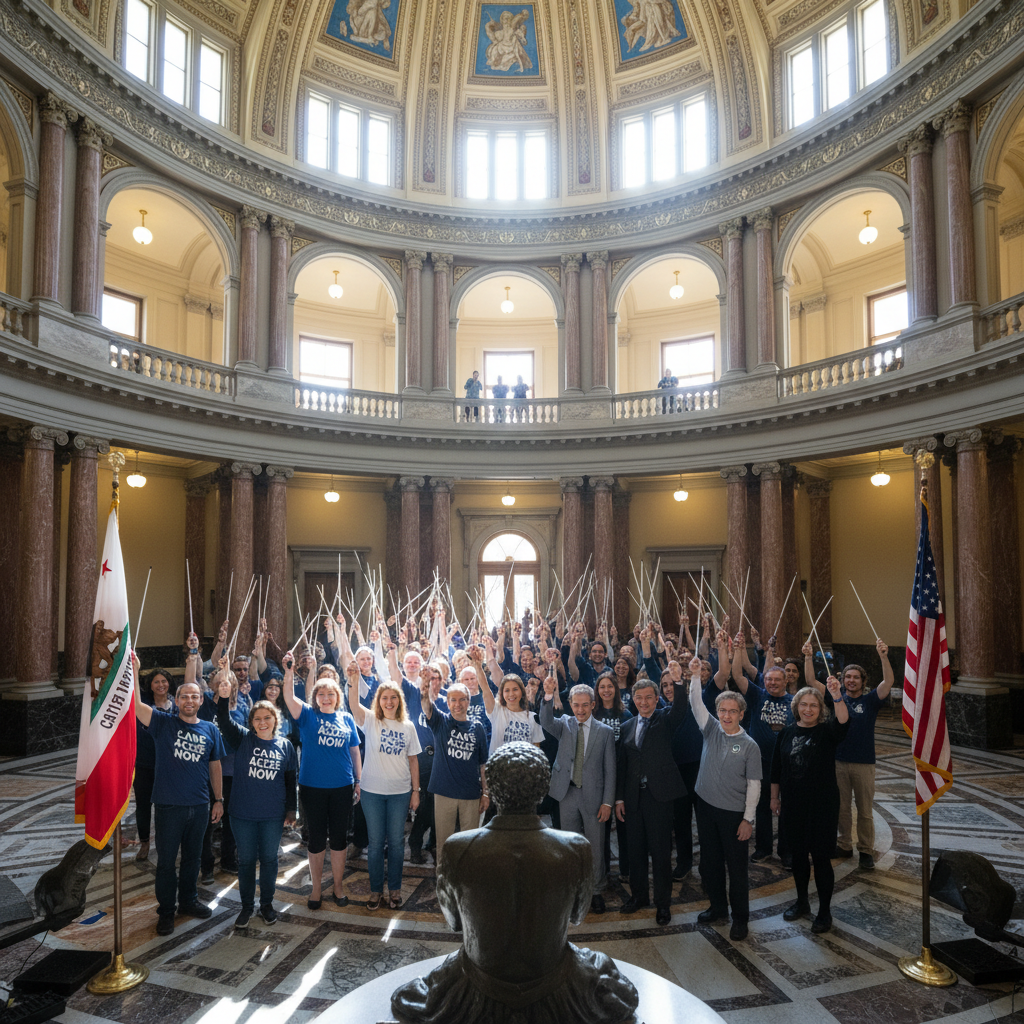
After six years of testimony, Beacon's policy team helped pass California AB 2402 — mandating that all state-funded rehabilitation programs include dedicated Orientation & Mobility training as a standalone service, not an add-on. The bill affected access for an estimated 87,000 Californians with visual impairments and became a model for legislation in four other states.

Client #10,000.
On November 14, 2019, retired Army Sergeant First Class Darnell Okafor became Beacon's ten-thousandth client. SFC Okafor lost seventy percent of his central vision to service-connected macular degeneration at fifty-four. He completed Beacon's Veterans Independence Program in twelve weeks and now volunteers as a peer navigator — the person who answers the phone when a newly-diagnosed veteran calls at midnight.
Three doors in. One mission behind all of them.

You just got a diagnosis. You don't have to figure out the rest alone.
A retinitis pigmentosa diagnosis at thirty-eight, or a sudden hemorrhage that takes central vision overnight — the ophthalmologist hands you a pamphlet and a referral and sends you home to a world that hasn't changed but suddenly feels impassable. Beacon's intake coordinators are themselves people who have navigated vision loss. They know what the pamphlet doesn't say.
Most clients are seen within 14 days of referral.

You served. Macular degeneration doesn't get to take what's next.
Age-related and service-connected macular degeneration is the leading cause of vision loss in veterans over fifty-five. The VA provides diagnosis. Beacon provides the training that happens after diagnosis — the twelve weeks of Orientation & Mobility instruction, the screen reader setup, the low-vision device evaluation, the peer navigator who served in the same branch and knows what it feels like to lose something you earned.
Beacon's Veterans Independence Program is VA-community-care eligible.

You're Googling at midnight because someone you love just stopped driving.
You noticed the dishes left on the wrong shelf. The hesitation at the curb. The way they stopped reading menus. You're not the one losing sight — but you're the one who called us, and that call matters. Beacon's family navigation service helps you understand what your person is experiencing, what training is available, and exactly how to make a referral without making them feel like a project.
Our "Refer Someone You Love" pathway takes four minutes.
Four programs.
One through-line:
you, moving forward.
Every service Beacon offers is delivered one-on-one, in your environment, by a certified specialist — not a volunteer, not an app, not a pamphlet. Independence is a physical skill. It requires a teacher.
Orientation & Mobility Training
Certified O&M specialists work one-on-one in your actual environment — your block, your bus route, your workplace. Not a clinic. Your life.
Outcome
Average client completes 12-week program and travels 3+ independent routes.
Screen Reader & Assistive Technology
JAWS, NVDA, VoiceOver, TalkBack — our certified AT specialists meet you where your devices are, set them up, and teach you to use them until you're fluent, not just functional.
Outcome
94% of AT graduates report independent device use at 90-day follow-up.
Braille Literacy
Grade 1 and Grade 2 Braille instruction for adults at any stage of vision loss. Braille is not a last resort — it's a second language that gives you access to every printed surface that matters.
Outcome
Typical adult learner reaches functional reading speed in 16–20 weeks.
Employment Support
Job retention coaching, employer accommodation consulting, and workplace travel training so that vision loss doesn't end a career — it redirects one.
Outcome
78% of employment program participants retain or gain employment within 6 months.
The work isn’t finished.
Here’s what’s waiting.
Currently on waitlist
0
adults waiting for services
Total served
0
since 1974
The waitlist updates every 48 hours. Every name on it is a person who found us, asked for help, and is waiting for a certified specialist to become available. Your referral moves that number.
I spent eight months after my diagnosis convinced that my life was essentially over. My O&M specialist at Beacon showed up at my apartment on a Tuesday morning with a white cane and a bus schedule. By Friday I had taken the 38 Geary to work for the first time in eight months. That was two years ago. I haven’t missed a day since.

Renata Osei-Bonsu
Beacon Graduate, 2024 · San Francisco, CA

Fifty years of showing up. One deliberate step forward.
Yours starts here.
No form on this page. The intake page takes 8 minutes. A coordinator calls within 2 business days.